
Internal Linking for AI Search: How to Build a Semantic Navigation Graph
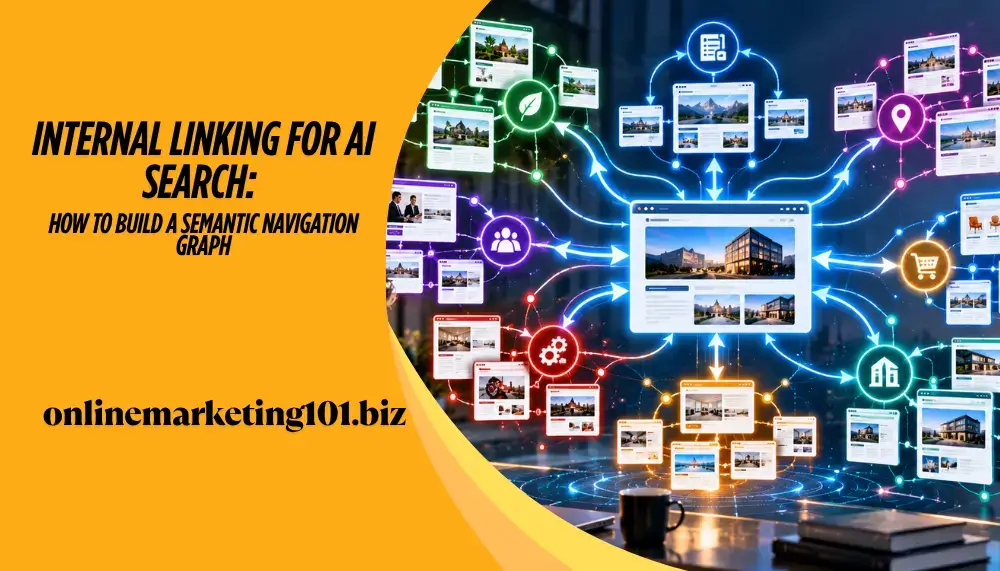
Internal Linking for AI Search:
How to Build a Semantic Navigation Graph
The era of rigid link quotas and random keyword-based internal links is over: AI answer engines and Google’s modern semantic search systems increasingly analyze relationships and knowledge structure. In 2026, internal linking is no longer merely a technical SEO task. It is a structural process that transforms your website into a machine-readable semantic navigation graph that supports crawlability, retrieval and the development of conversion pathways.
Internal Links as Meaning Signals: Semantic Relationships Instead of Simple Link Quotas
Many website owners still treat internal linking as a simple, quantity-based SEO task: they install an automated plugin that places a link to a service page every time a specific word appears.
This type of linking without meaningful context does not create a genuine semantic relationship. Modern search systems and large language models increasingly interpret the meaningful relationships between concepts. An internal link can be viewed as an edge in the website’s knowledge graph, connecting one concept to another and helping demonstrate how the two complement each other from a professional or topical perspective.
Semantic internal linking is not merely about passing PageRank. It builds a machine-readable knowledge map that reveals the logical network of a business’s expertise.
Pillar and Cluster Model: Semantic Content Architecture and the Deliberate Design of Link Relationships
One important method in modern content marketing and GEO optimization is the development of a pillar-cluster architecture. Instead of producing isolated blog articles, build logically connected topic clusters.
📚 Pillar Page
A comprehensive, in-depth professional guide covering an entire topic, for example “AI SEO Strategy”.
📋 Cluster Pages
Subpages that answer specific questions, are closely related to the central topic and link back to the pillar page in a contextually relevant way.
During planning, it is important to avoid semantically unjustified cross-linking. If a page within one topic cluster links to a completely unrelated page without a logical relationship, it can weaken the clarity of the website’s information architecture.
Anchor Text Strategy: Natural Semantics and Clear Context
Anchor text is the clickable text on which a link is placed. Modern natural-language processing systems may evaluate not only the anchor text itself but also the surrounding textual context.
Two common mistakes are particularly worth avoiding:
- Meaningless anchor text: phrases such as “click here”, “read more” or “on this page” provide very little semantic information about the destination page.
- Over-optimized anchor text: if every internal link uses exactly the same transactional keyword, it can create an unnatural and potentially manipulative-looking pattern.
A better approach is to use descriptive, natural and contextually appropriate anchor text. The link text should clearly indicate what professional answer or additional information the reader will find on the destination page.
Commercial Pathways: Transferring Informational Authority to Transactional Pages
On B2B websites, informational content — blogs, guides and professional articles — can often generate substantial organic traffic and AI citations. However, these pages frequently have a lower direct conversion rate on their own.
The objective is therefore to transfer the authority gained through informational content via deliberate commercial pathways toward the appropriate case studies, product pages and service pages. In this way, the internal-link structure functions not only as an SEO system but also as a business-navigation system.
Identifying Orphan Pages: Crawlability and RAG Readiness
Orphan pages are pages that do not receive adequate internal links from other pages on the website. Such pages can be more difficult to discover for both search engines and other automated content-processing systems.
If a valuable case study, research dataset or professional guide exists in isolation, it is less likely to become part of the website’s logically connected knowledge system. One of the fundamental tasks of an internal-link audit is therefore to identify orphan pages and connect them to the appropriate topic cluster.
Semantic Structure Calculator: Quick Audit of the Internal Link Graph
Select the statements that are true for the current internal-linking structure of your website. Based on your selections, the calculator provides a quick structural assessment.
🕸️ Semantic Silo and Internal Link Audit
Audit Your Semantic Internal-Link Graph Before Publishing Another Content Cluster
Even excellent professional content delivers less value if the internal-link structure does not clearly show the relationships between topics, services and entities. Make your website more logical for users, search engines and AI systems alike.
OnlineMarketing101 – Start an AI SEO and Semantic Link Audit →Miért választottak ezek a cégek minket?
- Giaform műanyag fröccsöntés
- Weboldal keresőoptimalizálás (SEO)
- Apple készülékek
- warhammer
- Boxkesztyű
- előtetők
- bútorok
- keresőmarketing ügynökség
- Keresőoptimalizálás
- lumineers
- Hirdetéskezelés
- kárpittisztítás
- előtetők
- Mellplasztika
- Bor
- Linképítés
- Boat party budapest
- Ads vagy SEO
Az onlinemarketing101.biz SEO ügynökség célja, hogy vállalkozásod online jelenlétét a legmagasabb szintre emelje. Weboldalunkon részletesen megismerheted keresőoptimalizálási szolgáltatásainkat és az azokhoz kapcsolódó árakat, amelyek segítenek átlátni a lehetőségeidet. Legyen szó digitális marketing trendek alkalmazásáról vagy márkád hatékony népszerűsítéséről, nálunk mindent megtalálsz. Fedezd fel legfrissebb tartalmainkat, és tudd meg, hogyan támogatjuk vállalkozásod növekedését és sikerét az online térben.

PARTNEREINK
Szolgáltatások & Partnerek
- Konténer-rendelés.eu – gyors konténer építkezéshez
- Centrumaudit – pénzügyi vizsgálat
- Dental Zirkon – fogászati koronák
- HungaroDental – fogászat
- Adatkezelés
Egészség & Technológia
- Magnézium – étrendkiegészítő
- GAL termékek – egészségtámogatás
- Lumineers – foghéjak
- Shefitness – edzés nőknek
- Műanyag Fröccsöntés – ipari gyártás
- Dekor szalvéta – esküvőkre
- Chiptuning videó – tuning bemutató
- Lemezmegmunkálás – gépipari szolgáltatás
Ingatlan & Jog
- Polikarbonát tető – időjárás elleni védelem
- Előtető – modern kialakítás
- AI – hírek
- Hulladék jog – engedélyezés
- SEO szolgáltatás
- Munkajog – jogi tanácsadás
- Dugulás 16. kerület
- Kollagén – szépségápolás
E-kereskedelem & Lifestyle
- SEO Meetup – nemzetközi közösség
- Makett – jármű modellek
- Kárpittisztítás – professzionális takarítás
- Weboldal SEO – technikai keresőoptimalizálás